Publications
Crimes Against Public Administration


Crimes Against Public Administration

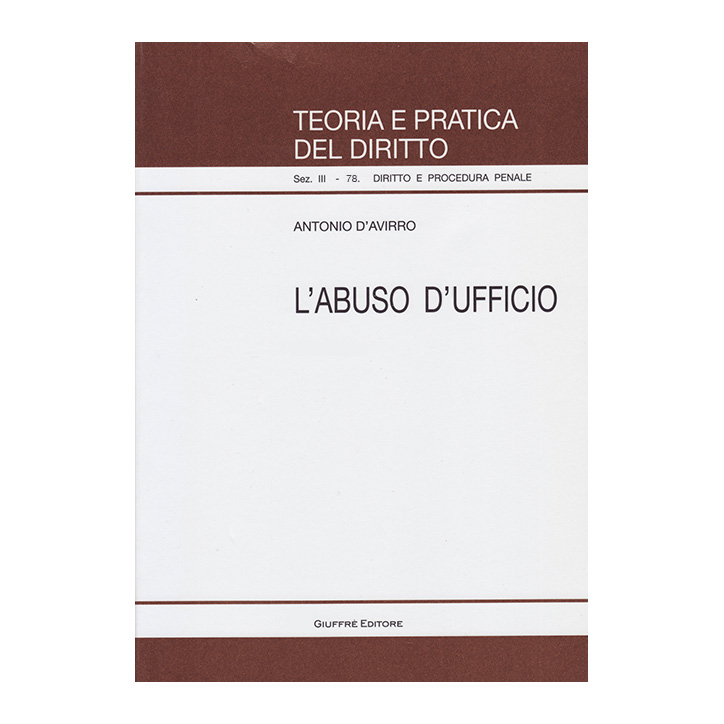
Antonio D’Avirro
Giuffré, 2021.
The subject of the work is the crime of abuse of office, analyzed by retracing the path and various stages that have characterized the reforms of this crime, highlighting the most significant passages.
Indeed, only through a careful historical reconstruction of the crime of abuse of office is it possible to understand the various reasons for the latest reform, which arises from the public Administration’s urging to reduce the framework of insecurity affecting public officials.
Once again, the legislator has tried to limit the operational scope of the crime of abuse of office, attempting to nullify the criminal relevance of the misuse of power: an attempt that, however, seems to have failed in the face of the first responses from jurisprudence.
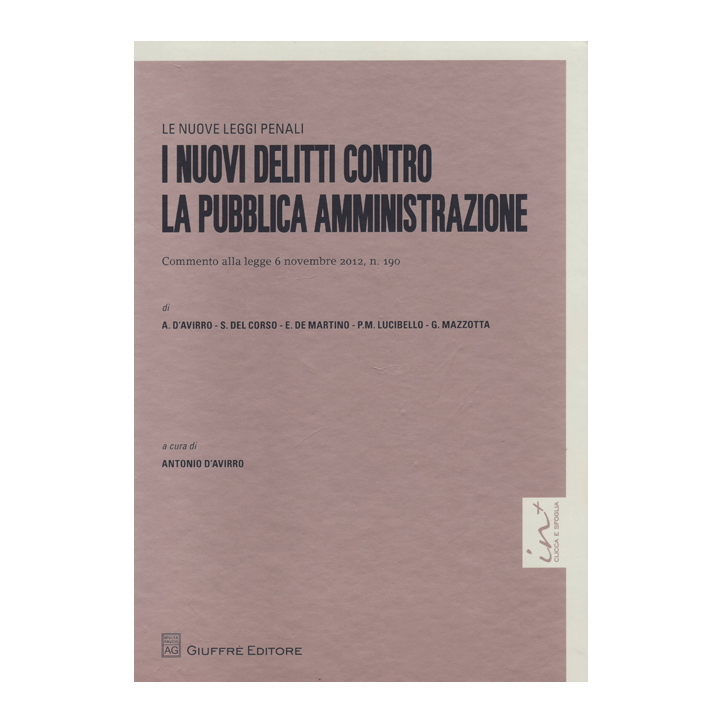
Edited by Antonio D “Avirro
A. D” Avirro, S. Del Corso, E. De Martino, P.M. Lucibello, G. Mazzotta
Giuffré, 2012.
The field of crimes against Public Administration is one of the most troubled areas of criminal law, having undergone a series of reforms from 1990 to the present that have significantly affected the criminal statute of the Public Administration.
Law 6 November 2012 n. 190 (Provisions for the prevention and repression of corruption and illegality in public administration) arises from a dual need, due on one hand to the offensive inadequacy of some crimes against the Public Administration, particularly corruption, and on the other hand to the necessity to comply with obligations arising from international conventions.
The reform is characterized by the introduction of new criminal offenses into the penal system of Public Administration, such as undue inducement to give or promise benefits and trafficking of illicit influences, as well as by the tightening of criminal sanctions, especially concerning the crime of proper corruption for acts contrary to official duties, probably dictated also by the need to extend the statute of limitations.
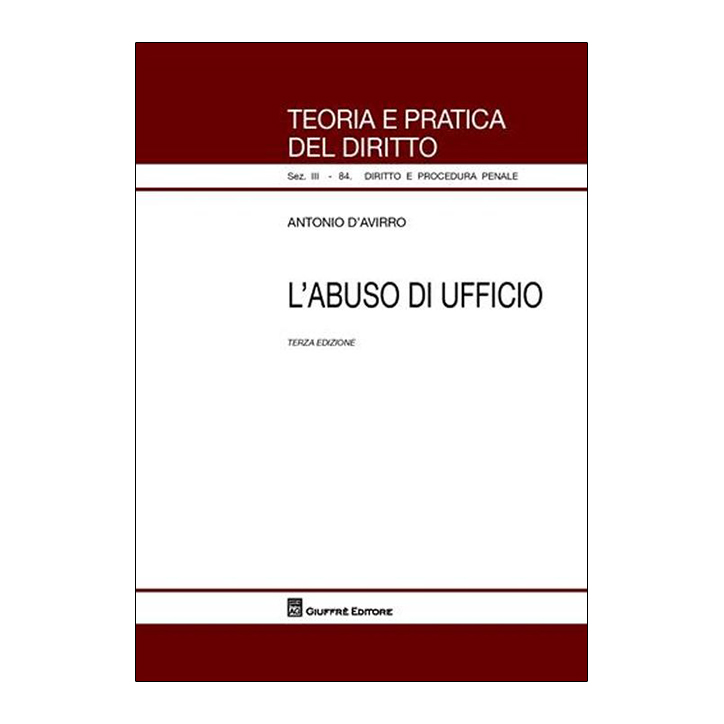
Antonio D’Avirro
Giuffré, 2009.
The “author analyzes the crime of abuse of office, which still proves to be an easily contestable law, retracing the path and various stages that led to the 1997 reform, highlighting the most significant passages.”
“Indeed, only through a careful historical reconstruction of this crime is it possible to understand the true reasons for the reform.”
The final solution, given by the Legislator, to the case of abuse of “office is the result of an increasingly felt need to avoid the overlap of criminal offense with administrative offense through the definition of more precise boundaries, in order to overcome that”“deficit”“of legality and determinacy that had characterized this crime until 1997.”
The work is enriched by the analysis of the issues addressed by the doctrine and the interpretations provided by jurisprudence.
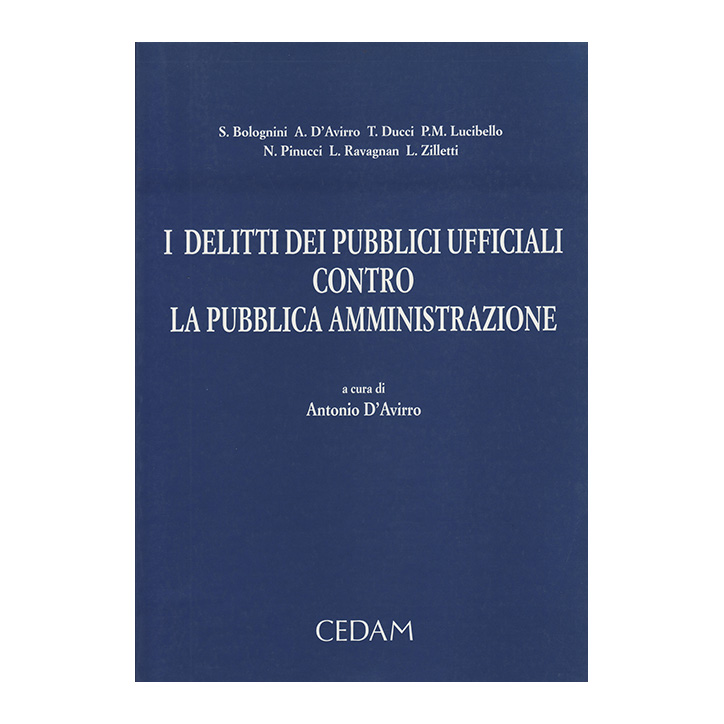
S. Bolognini, A. D’Avirro, T. Ducci, N. Pinucci, L. Ravagan, L. Zilletti
Cedam, 1999.
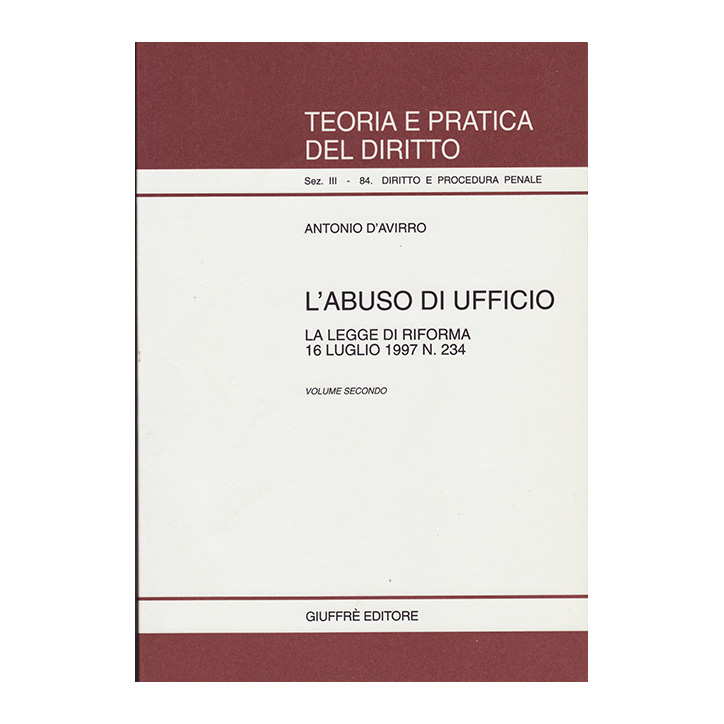
Antonio D’Avirro
Giuffré, 1997.
Antonio D’Avirro
Giuffré, 1995.